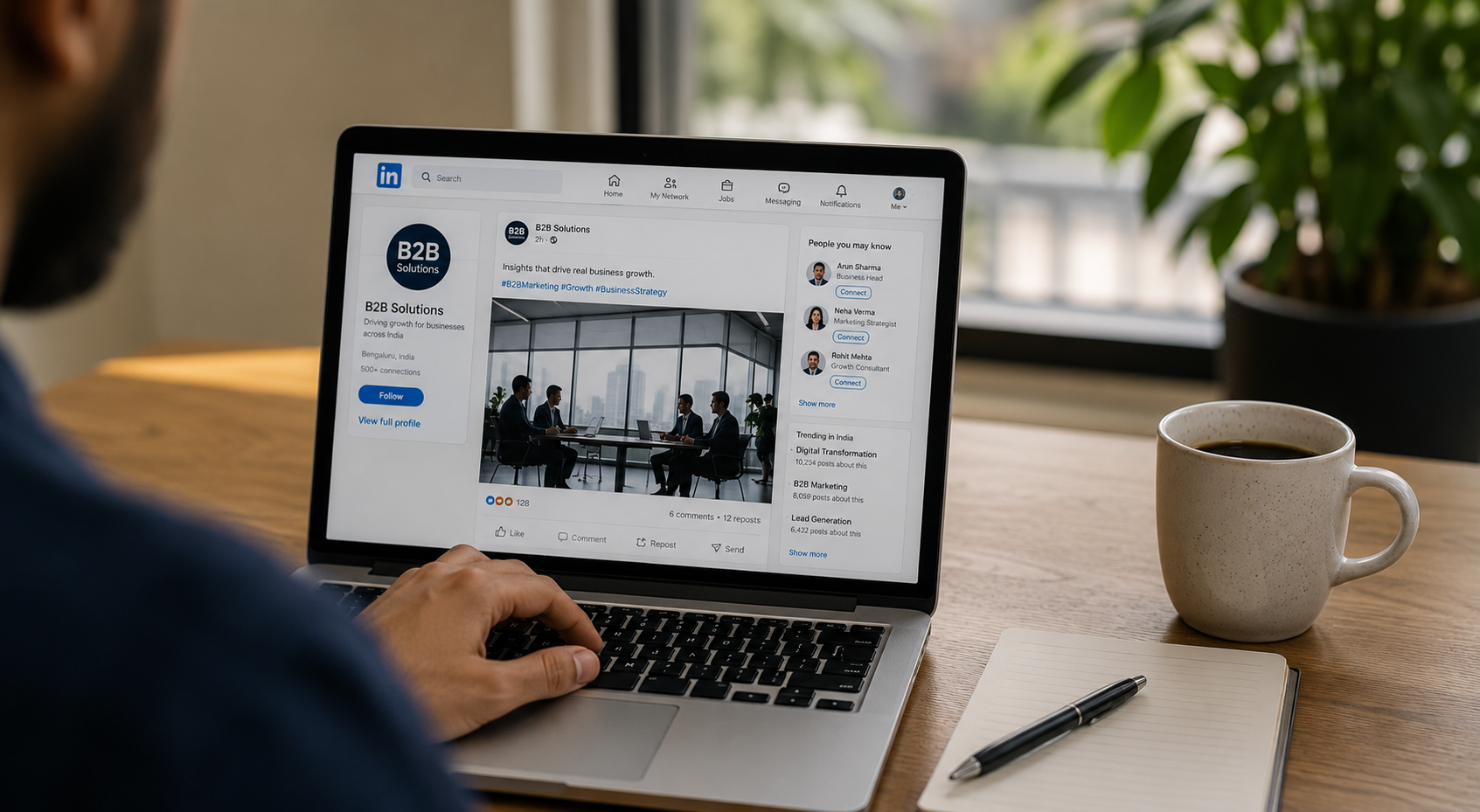
Posts go out twice a week: industry news reposts, product announcements, team photos from the offsite. Each one gets a handful of reactions, mostly from colleagues. No one is reaching out. No one is asking for a meeting. The page exists. The pipeline doesn’t.
This is the LinkedIn situation for most B2B brands in India. They’re present. They’re posting. But presence and posting aren’t the same as pipeline.
The B2B brands that generate actual business from LinkedIn- inbound inquiries, qualified demo requests, warm referrals from executives who followed the brand for six months before reaching out- are doing something different. They’re not posting more. They’re publishing with a point of view. And they’re doing it from personal accounts, not company pages.
Here’s the distinction, and here’s how it works.
LinkedIn’s algorithm is built for reach, specifically, organic reach from personal accounts with active engagement. A post from a company page reaches a fraction of its followers. A post from the CEO of that same company, on their personal account, tagged with the company page, reaches the CEO’s network plus the algorithm’s extended distribution, which is typically 5–10x the company page’s organic reach.
This is not a secret. But most B2B brands still run their LinkedIn strategy through the company page, scheduling posts, publishing announcements, boosting content with ad spend, while the CEO and senior leadership team maintain dormant personal accounts or post sporadically with no strategic intent.
The brands generating pipeline from LinkedIn have inverted this. The company page is the anchor for company news, job postings, and case study distribution. The individual accounts of founders, partners, and senior leaders are the engine for thought leadership, perspective, and the kind of authentic content that builds the trust that leads to a DM.
Pipeline from LinkedIn comes from trust. Trust comes from consistency. Consistency comes from a personal voice, not a brand voice. And a personal voice lives on a personal account.
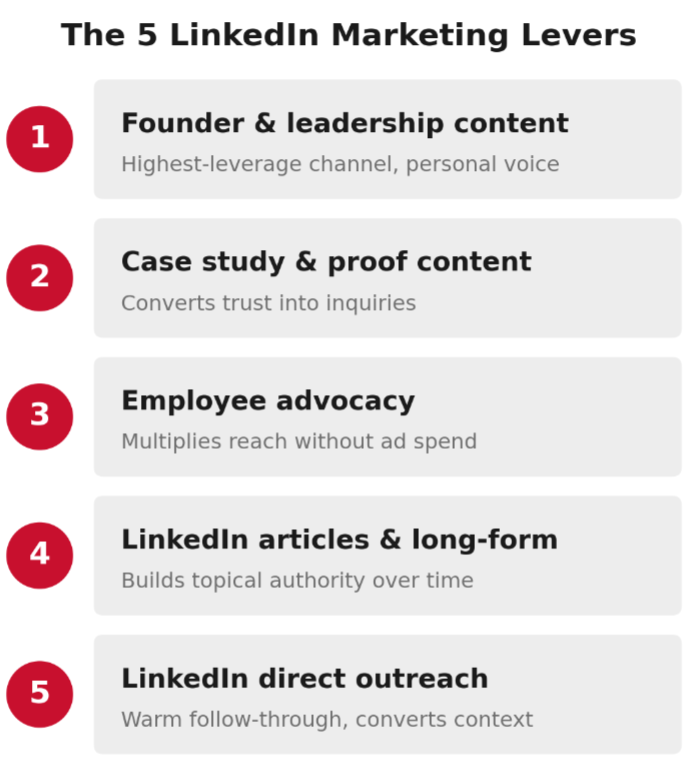
For Indian B2B brands, the founder’s LinkedIn is the most underused marketing asset in the portfolio.
A well-executed founder LinkedIn presence does something no brand campaign can do: it makes a decision-maker feel like they know the person behind the company before they’ve ever spoken. When that decision-maker eventually has a problem your company can solve, the first person they think of is the founder whose content they’ve been reading for three months.
Bright Brain’s founder Suhail Bajaj has generated 3–4 confirmed inbound leads from LinkedIn over 12 months, from a personal LinkedIn presence, not from ad spend. That’s the pattern: consistent, perspective-driven content from a personal account, building trust with the exact audience that eventually reaches out.
The formula for founder thought leadership content that builds pipeline:
Frequency matters less than consistency of perspective. A founder who posts twice a week with a genuine point of view outperforms one who posts daily with recycled industry content.
Thought leadership builds trust. Case study content converts that trust into pipeline.
A well-constructed LinkedIn case study post follows a specific shape:
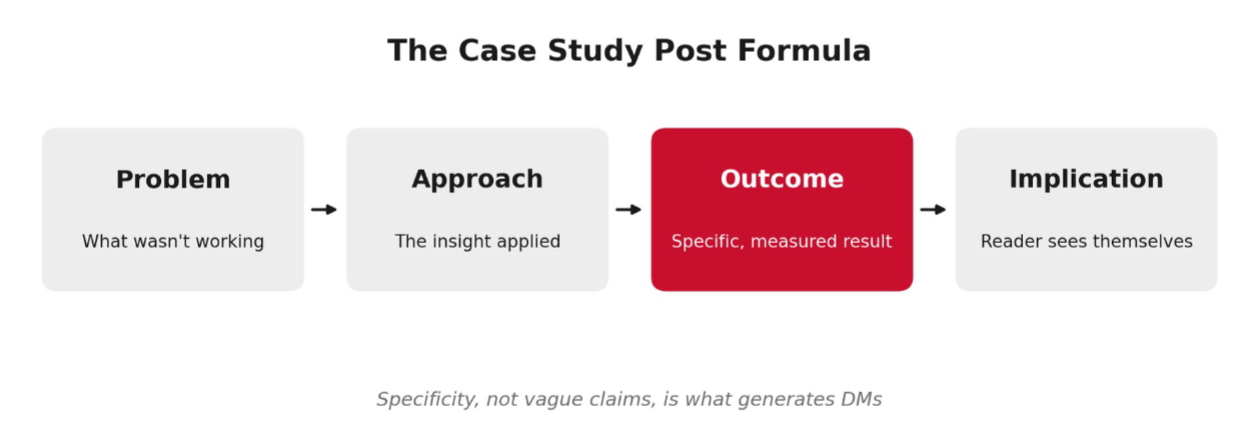
This format works because it demonstrates competence without claiming it. It shows, it doesn’t tell. And it ends with an implicit question: “Do you have this problem too?”, which generates DMs, comments, and connection requests from people who do.
The case study post is the highest-converting content type on b2b linkedin marketing. It’s also the one most often written badly, with vague outcomes, anonymous clients, and no specific insight. Specificity is the difference between a post that generates pipeline and one that gets three likes from the marketing team.
Every employee of a B2B brand has a LinkedIn network. Most of that network overlaps with the brand’s target audience. And most of that network is not following the company page.
Employee advocacy, activating the team to share, comment on, and create content related to the brand’s work, is the most efficient way to multiply organic reach on LinkedIn without buying ads.
The brands that do this well don’t ask employees to share the company page’s latest post. They give employees content that’s worth sharing, insights from client work, behind-the-scenes perspectives on the team’s expertise, and industry takes that the employee would genuinely associate with. When an employee shares because they believe in the content, not because the marketing team asked, the engagement is authentic, and the reach is meaningful.
For Indian B2B brands with 20–100 employees, a structured employee advocacy programme, with content guidelines, a sharing calendar, and leadership modelling the behaviour, can add 3–5x the organic reach of the company page alone.
LinkedIn Articles (the platform’s long-form blog format) index on Google and appear in LinkedIn search results for relevant topics. A well-written 1,000-word LinkedIn Article on a specific B2B problem, “How Indian manufacturers can compete with Chinese suppliers on digital reach,” for example, can generate search traffic and LinkedIn search visibility for months after publication.
For B2B brands targeting niche decision-maker audiences, LinkedIn Articles build topical authority in a specific domain, which makes the brand the default reference point when that audience is evaluating vendors in the space.
The discipline for LinkedIn Articles is the same as for blog posts: a specific angle, a clear audience, a genuine point of view, and a call to action that makes it easy for a reader to reach out or learn more.
Content alone doesn’t close the pipeline. At some point, the brand needs to make direct contact, and LinkedIn is the best platform to do it without the friction of a cold email or the blind reach of a form submission.
The mistake most B2B brands make with LinkedIn outreach is treating it as cold prospecting: a request + generic “we help companies like yours” message + immediate sales pitch. That approach generates a high ignore rate and burns goodwill with the exact audience the brand has been building trust with through content.
The right approach is the warm outreach that follows sustained content engagement. When a decision-maker has liked three of your posts, commented on one, and followed your profile, reaching out with a specific, relevant message (“I noticed you commented on my post about X; we’ve been working on something directly related to that challenge”) converts at a significantly higher rate than cold prospecting.
Content builds the context. Outreach converts the context into a conversation.
The B2B brands generating a consistent pipeline from LinkedIn in India share a set of characteristics:
The founder or a senior leader is personally active. Not the social media manager. Not the company page. The person who would actually be in the room if the prospect agreed to a meeting.
The content is specific. It names industries, names problems, names outcomes. Vague content about “the future of marketing” or “digital transformation” generates reactions but not inquiries. Specific content about “how a Pune-based B2B manufacturer reduced their CPL from ₹4,000 to ₹900 by restructuring their Google Ads targeting” generates DMs.
The posting cadence is sustainable. The brands that build real LinkedIn presence are the ones that post twice a week for 18 months, not the ones that post ten times in January and go silent in March. Consistency is the compounding mechanism on LinkedIn.
They treat LinkedIn as a long-game channel, not a campaign. Pipeline from LinkedIn is not generated in a month. The decision-maker who reaches out in November may have been following the brand’s content since June. The channel compounds in a way that performance marketing doesn’t, but it requires the patience and consistency to let it compound.
B2B LinkedIn Pipeline: The 5-Lever Model
Organic LinkedIn is the right place to start for most Indian B2B brands; the ROI, founder thought leadership, and case study content are higher than most paid LinkedIn campaigns before you’ve established credibility on the platform.
But LinkedIn Ads add significant capability once the organic foundation is built:
LinkedIn Sponsored Content amplifies your best-performing organic posts to a broader audience with the same targeting precision: job title, company size, industry, geography. Posts that already resonate organically tend to convert better with paid amplification than posts created purely for ads.
LinkedIn InMail campaigns deliver a message directly to a decision-maker’s inbox, with higher open rates than email for B2B audiences. When paired with a specific, relevant message (not a generic sales pitch), InMail campaigns generate meeting requests that cold email rarely achieves.
Account-Based Marketing (ABM) on LinkedIn allows B2B brands to run targeted campaigns specifically to employees at named accounts, serving content to every decision-maker at 50 target companies, building familiarity before any outbound outreach begins.
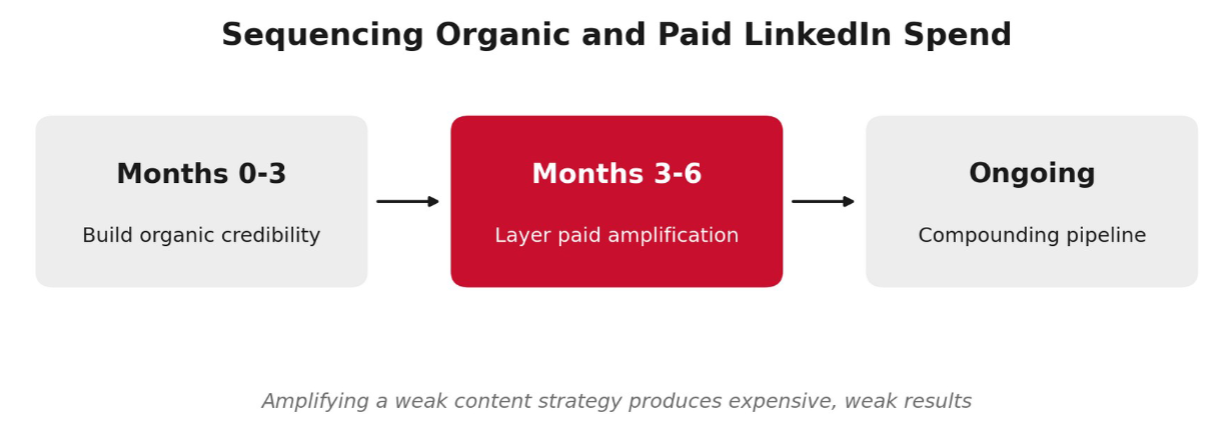
The right sequencing for most Indian B2B brands: establish organic credibility first (3–6 months of consistent content), then layer ad spend to amplify what’s working. Paying to amplify a weak content strategy produces expensive weak results.
The right LinkedIn marketing partner for a B2B brand needs to demonstrate:
Q1: Does organic LinkedIn marketing actually generate B2B pipeline in India?
Yes. B2B LinkedIn marketing generates pipeline, but on a long-term timeline. Organic LinkedIn builds trust over 6 to 12 months. The brands generating consistent pipeline are the ones that have been publishing valuable content consistently, so decision-makers already know who they are before they need a solution. B2B LinkedIn marketing compounds over time. It doesn’t deliver instant results.
Q2: How often should a B2B brand post on LinkedIn to build pipeline?
For effective B2B LinkedIn marketing, post two to three times per week from the founder’s or senior leader’s personal account. The company page should support the strategy, but the personal profile drives the most engagement and trust. Consistency over 6 to 12 months matters far more than posting every day.
Q3: What kind of LinkedIn content generates the most B2B inquiries?
The best B2B LinkedIn marketing content includes case studies with measurable outcomes, opinion-led posts that take a clear stance on industry topics, and behind-the-scenes content that shows how your team solves real business problems. The posts that generate inquiries are the ones that make prospects think, “This team understands my challenge.”
Q4: Should a B2B brand invest in LinkedIn Ads before building an organic presence?
In most cases, no. A strong B2B LinkedIn marketing strategy starts with building an organic presence. LinkedIn Ads work best when they amplify content that has already proven to resonate with your audience. Publishing consistently for 3 to 6 months first helps build credibility, making paid campaigns more effective and cost-efficient.
Q5: How is LinkedIn different from other social media platforms for B2B marketing?
B2B LinkedIn marketing works because LinkedIn is a professional platform where decision-makers actively consume business content, evaluate vendors, and explore solutions. On platforms like Instagram or Facebook, the same audience is typically in a consumer mindset. LinkedIn allows B2B brands to build authority in a professional context rather than interrupting users with promotional content.
Q6: How do I measure LinkedIn marketing ROI for a B2B brand?
Measure the success of your B2B LinkedIn marketing by tracking inbound DMs, connection requests from your ideal customer profile, inquiry sources, pipeline influenced by LinkedIn content, and follower growth among relevant job titles. ROI is rarely measured through a single post. Instead, LinkedIn builds trust over time, which gradually translates into qualified leads and revenue.